
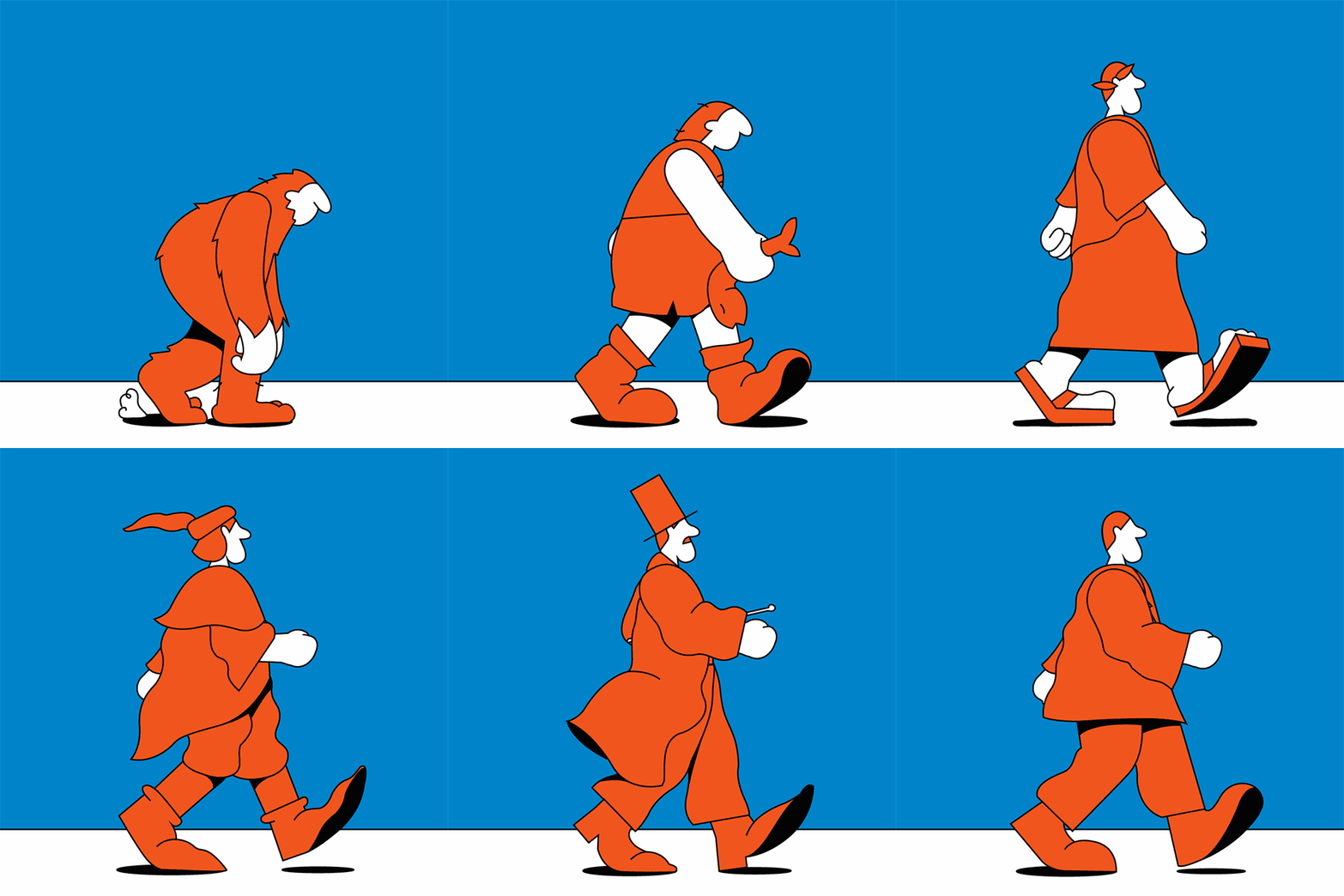
This post will explore some of the significant milestones and innovations that have shaped the animation industry and culture.
Animation in Ancient Times
The earliest forms of animation can be traced back to prehistoric times when people painted scenes of movement and expression on cave walls, pottery, and other surfaces. These paintings were like comic strips, depicting stories and events with sequential images. Some of the oldest examples of animation are found in the ancient civilizations of Egypt, Greece, China, and India, where people used shadow play, puppetry, and mechanical devices to create moving images and illusions.
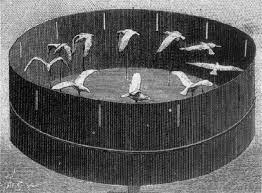
For instance, the ancient Greeks invented the zoetrope, a device that spun a disk with images around a central axis, creating the impression of motion when viewed through slits.

Animation in the 19th Century
During the 19th century, several new technologies and inventions were developed that made it possible to create and project moving images. Some of the most influential devices were the magic lantern, the phenakistiscope, and the flip book.
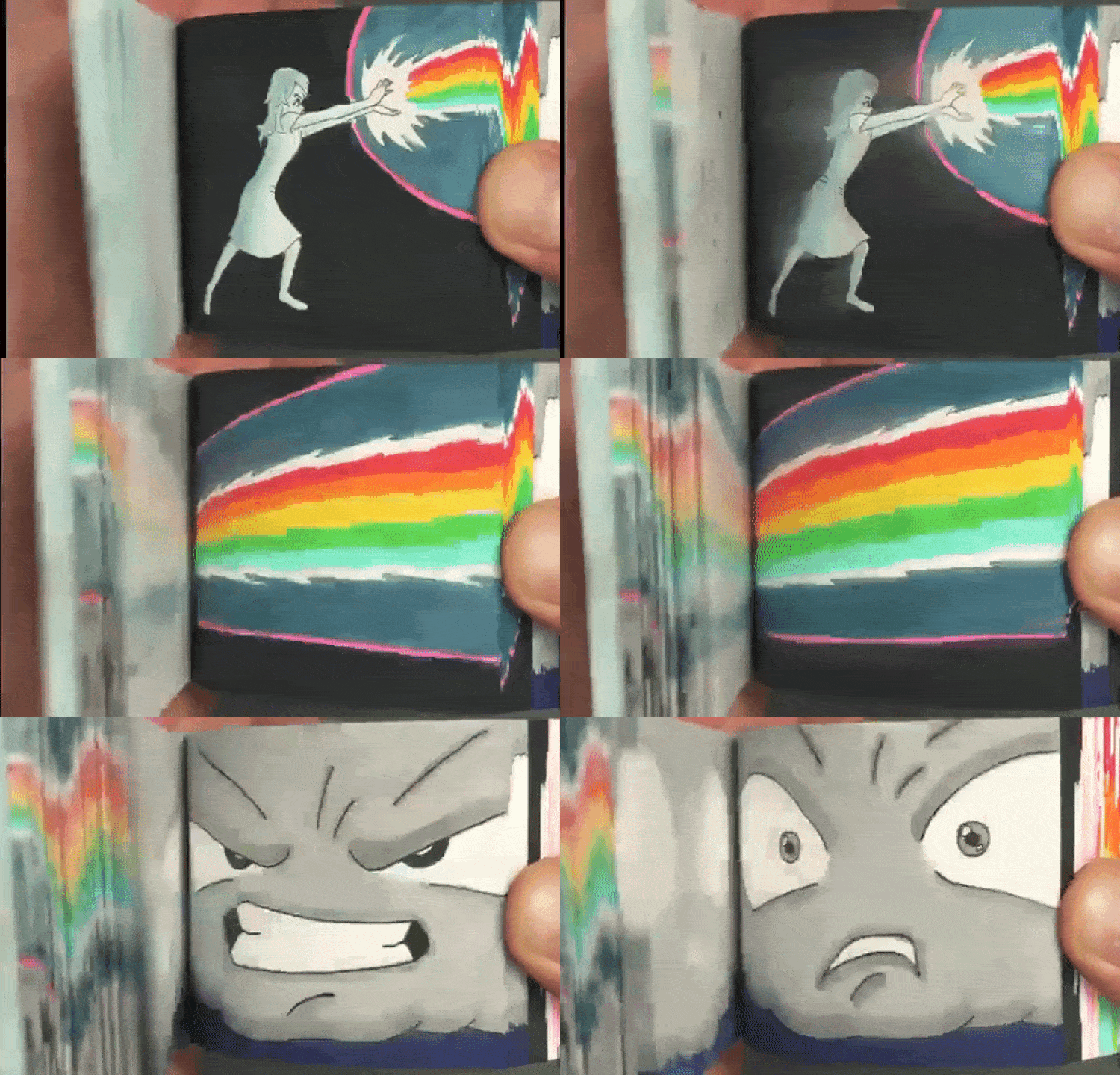
The magic lantern was a device that used a light source and a mirror to project images from glass slides onto a wall or screen. It was used for entertainment, education, and magic shows. The phenakistiscope, on the other hand, was a device that had a spinning disk with images on one side and slits on the other. When viewed through the slits, the images appeared to move. This device was one of the first to use the principle of persistence of vision, which is an optical illusion that makes us see continuous motion from a series of still images. Lastly, the flip book was a book that had a series of images that changed slightly from one page to the next. When the pages were flipped rapidly, the images seemed to animate. This simple and popular way of creating and viewing animation made the flip book a hit during the 19th century.
Animation in the 20th Century
The 20th century was a golden age for animation. During this century, many different styles and techniques of animation emerged and evolved, including:
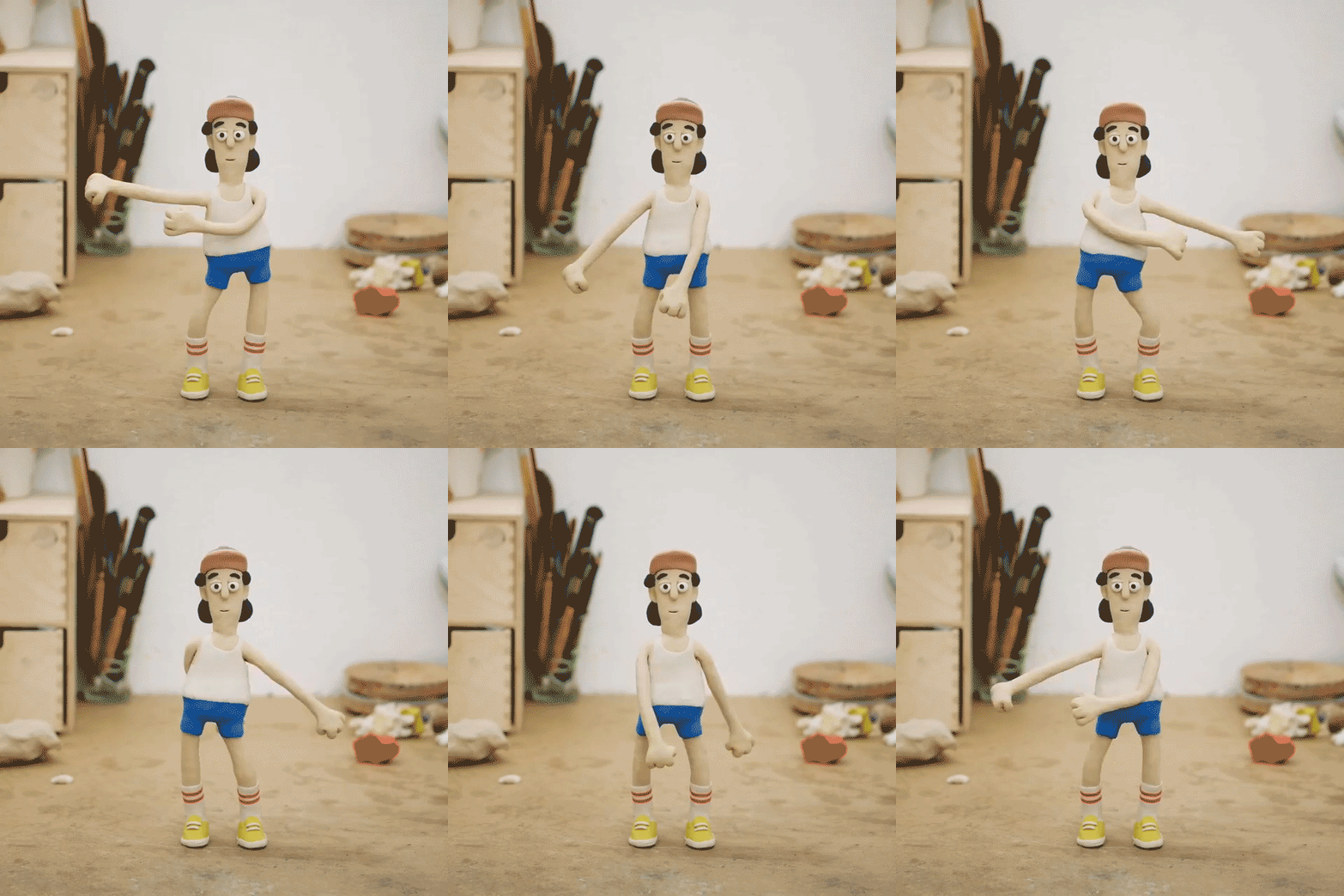
Stop-motion animation: This technique involved taking photographs of objects or models that were moved slightly between each shot. When the photographs were played back in sequence, they created the illusion of movement. Stop-motion animation was used to create realistic effects and characters, such as dinosaurs, monsters, and puppets. Some of the pioneers of stop-motion animation were Willis O’Brien, Ray Harryhausen, and Nick Park.
Cel animation: This technique involved drawing or painting images on transparent sheets of celluloid, called cels, and then placing them over a background and photographing them one by one. Cel animation was the dominant technique for producing hand-drawn animation, especially for feature films and television shows. Some of the most famous studios and artists that used cel animation were Walt Disney, Warner Bros, Hanna-Barbera, and Hayao Miyazaki.
Computer animation: This technique involved using computers to generate and manipulate images, either in two dimensions (2D) or three dimensions (3D). Computer animation revolutionized the animation industry, as it allowed for more realistic, detailed, and complex animations, as well as new forms of expression and interactivity. Some of the pioneers and leaders of computer animation were Pixar, DreamWorks, Industrial Light & Magic, and Valve.
Animation in the 21st Century
The animation industry and culture has continued to expand and evolve in the 21st century, giving rise to new trends and developments such as:
– Anime: A term used to refer to the distinct Japanese style of animation that has gained global popularity due to its unique aesthetics, themes, and genres. Some of the most popular and influential anime series and films include Naruto, Dragon Ball, Spirited Away, and Your Name.

– Web animation: This refers to animation content created and distributed online through platforms such as YouTube, Netflix and Newgrounds. Web animation has enabled more independent and diverse creators to produce and share their animations, as well as more interactive and experimental forms of animation. Examples of web animation include Homestar Runner, Salad Fingers, RWBY, and BoJack Horseman.
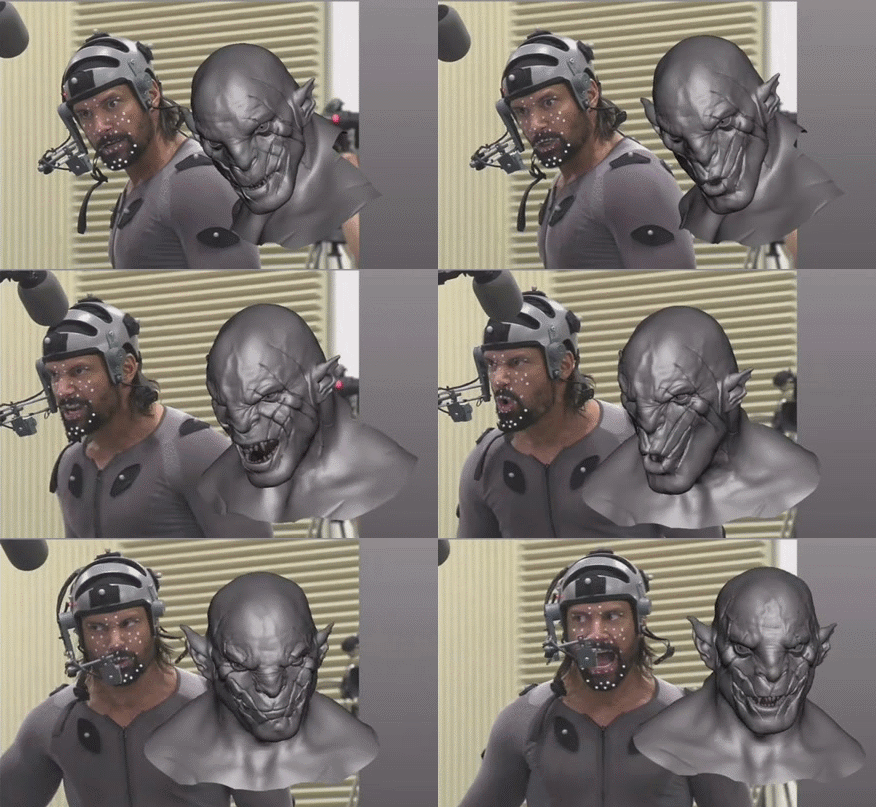
– Motion capture: This is a technique that involves recording the movements and expressions of real actors and transferring them to animated characters using sensors and cameras. Motion capture has been used for creating more realistic and expressive animations, especially for human and animal characters. Examples of motion capture include The Lord of the Rings, Avatar, The Lion King, and The Last of Us.
Conclusion
Animation is a captivating and multifaceted art form that has a rich and extensive history. Since ancient times, it has been used to tell stories and depict motion with creativity and innovation, from paintings and devices to modern technologies and platforms. Animation has provided entertainment, education, and inspiration for countless generations and cultures, and it will undoubtedly continue to do so in the future.

