As generative AI becomes part of everyday filmmaking, the real challenge is shifting from what we can create to what we can actually control.
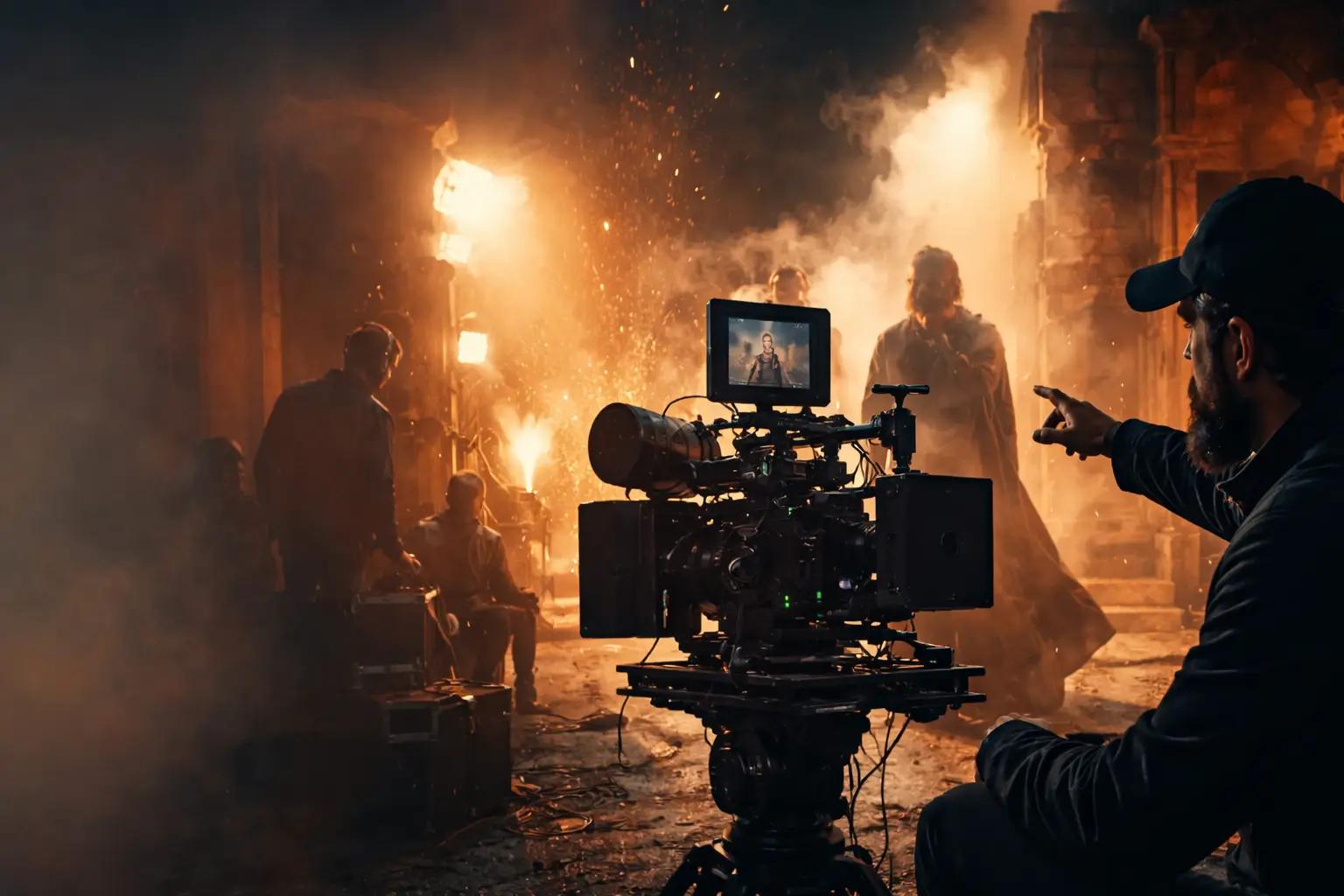
Not long ago, generating a convincing cinematic sequence from a few lines of text felt like science fiction. Today, we can create remarkable images, animate characters, simulate camera movements, and explore entire visual worlds without ever stepping onto a physical set.
And the technology keeps moving.
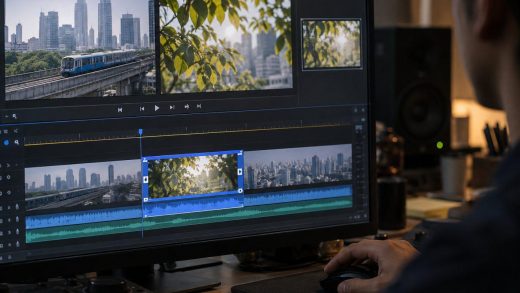
In September 2026, Adobe introduced new generative capabilities directly inside Premiere Pro and After Effects, while Runway brought its tools into established editing workflows. AI is no longer simply a standalone experiment. It’s becoming part of the production pipeline.
But somewhere between a beautiful five-second clip and a finished film, things become considerably more complicated. Because generating a shot and producing a film are two very different challenges.
The Illusion of a Finished Image
One of the most fascinating things about generative AI is how quickly it can deliver something that looks finished.
A carefully composed frame. Beautiful lighting. A cinematic camera movement. A character who appears to belong in a feature film.
It’s impressive. And increasingly, it’s genuinely useful.
But a convincing individual shot tells us surprisingly little about how well it will work in a sequence. What happens when that character needs to appear again, from a different angle? When the camera must follow a specific movement? When an object needs to remain in precisely the same position across several shots? What happens when the director asks for a subtle change in performance, without changing the lighting, wardrobe, framing, or everything else that was already approved?
Suddenly, the challenge isn’t creating something beautiful.
It’s creating exactly what the story needs, and being able to reproduce, revise, and control it.
Continuity Is More Than a Technical Problem
Traditional filmmaking has spent more than a century developing ways to maintain continuity.
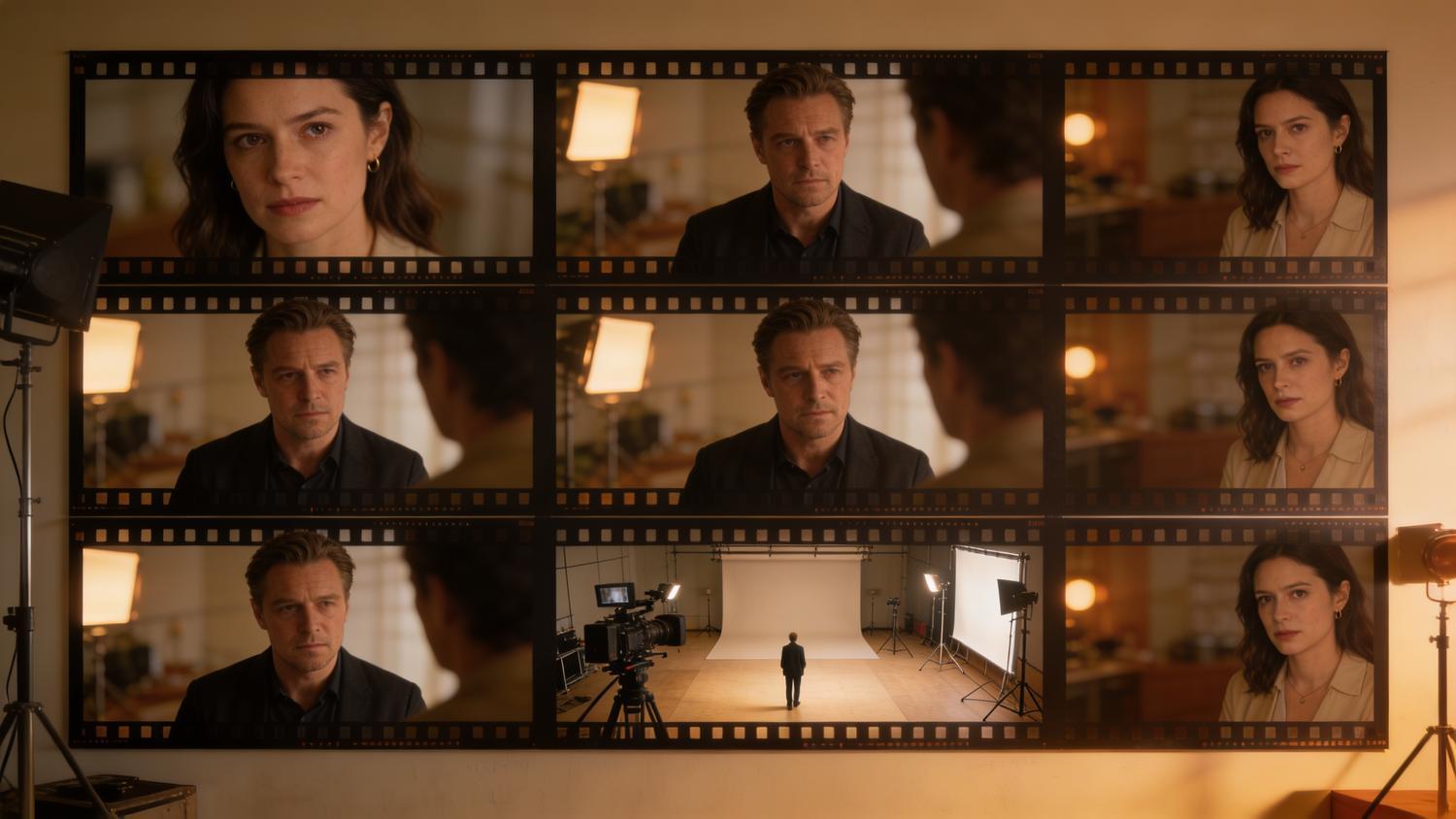
In animation and VFX, character rigs, established environments, lighting setups, cameras, and carefully structured workflows allow production teams to make changes without rebuilding an entire scene. Generative filmmaking works differently. Although reference images, video conditioning, and emerging editing tools have improved control considerably, maintaining consistent characters, environments, motion, and details across multiple shots remains an active technical challenge. And continuity isn’t just about whether someone’s shirt changes color between frames. It’s about maintaining a believable world. The position of a hand. The direction of a glance. The weight of an object. The rhythm of a movement. A performance that feels connected to the moment before it. These details might seem insignificant in isolation. Together, they determine whether an audience remains immersed in a story.
The Director Still Needs to Direct
There is a difference between accepting a convincing result and deliberately creating the right one. A director doesn’t simply ask for a beautiful image. Every decision has a purpose. Why is the camera positioned there? Why does the character hesitate? Why does the scene hold for another second? Why should the lighting feel uncomfortable rather than inviting? Generative AI can offer interpretations of those instructions, sometimes surprisingly compelling ones. But creative production requires more than interpreting an initial idea. It requires repeated decisions, precise adjustments, and an understanding of how one shot changes the meaning of another. This doesn’t make AI incompatible with filmmaking. It makes direction, visual literacy, and editorial judgment even more important. And it raises an uncomfortable question: when almost anyone can generate an impressive image, what distinguishes a professional creative team?
Increasingly, the answer may lie in the ability to make intentional decisions, maintain consistency, and deliver a result that survives multiple rounds of revision.
A New Production Pipeline Is Emerging
The interesting development isn’t simply that AI video looks better than it did a year ago. It’s that generative tools are becoming more closely integrated with professional software and workflows. Rather than treating AI as a machine that produces an entire finished film, production teams can use it for selected tasks: concept exploration, previsualization, creating supplementary footage, developing visual alternatives, or experimenting with sequences that would otherwise be expensive to stage. Some projects may eventually rely predominantly on generative production. Others will combine live action, 3D animation, traditional VFX, and AI-assisted elements. The most effective approach will depend on the creative requirements, level of control, budget, and final deliverables.
And that’s the point.
The future of filmmaking is unlikely to be defined by a single tool. It will be shaped by how intelligently different tools are combined.
Faster Doesn’t Always Mean Cheaper
AI has undoubtedly reduced the cost of generating certain kinds of imagery.
But production costs aren’t measured by generation time alone. They also include experimentation, failed attempts, creative supervision, revisions, editing, sound, compositing, quality control, and delivery. A shot that takes minutes to generate may still require substantial work before it fits into a finished production. Conversely, for the right application, AI can eliminate expensive or time-consuming traditional steps.
Neither outcome should be assumed. For production studios and their clients, the meaningful question isn’t simply how fast an image can be generated. It’s how predictably a complete project can be delivered to the required standard.
The Craft Is Changing. It Isn’t Standing Still.
The industry is evolving, and so are the skills it demands. Some established processes will become faster. Some roles will change. Some tasks that once required specialized teams may be increasingly automated. Pretending otherwise would be naive. But there’s a difference between automating an execution task and understanding what needs to be executed in the first place.
At ArtSolomon, our work has always involved combining creative thinking with production technology, across animation, VFX, design, and visual storytelling. We see generative AI as another expanding part of that landscape. One worth exploring, testing, questioning, and applying where it genuinely makes sense.
So, Can AI Produce a Film?
Yes, in certain formats, with the right workflows, and with varying degrees of human intervention, it already can. But producing a film is not the same as generating a collection of visually impressive shots. A film needs structure, continuity, intention, rhythm, and a coherent creative vision. As generative technology becomes more capable, the distinction between what is technically possible and what is creatively meaningful will only become more important.
The question is no longer whether AI can create the image, but whether we know what the image needs to say.