The latest developments from Adobe and Runway suggest a turning point in AI filmmaking: generative tools are moving directly into the software where films are actually made.
For the past few years, the conversation around AI filmmaking has focused heavily on generation. Which model produces the most realistic footage? Which can simulate the most convincing camera movement? Which delivers the most cinematic results? But an equally important transformation is now taking place, and it has less to do with generating spectacular images.
AI is moving into the editing timeline.
In September 2026, Adobe introduced new generative capabilities for Premiere Pro and AI-assisted workflows for After Effects. On the same day, Runway launched plugins that bring its generative models directly into both applications. Just weeks later, Runway expanded its integration to DaVinci Resolve.
These developments represent more than another round of AI product announcements. They point toward a fundamental change in how generative technology fits into professional film production.
From Standalone Generation to Integrated Production
Until recently, working with AI-generated video often meant moving between several disconnected applications. An editor might export a reference frame, open a separate AI platform, generate several variations, download the chosen result, and import it back into the editing software. If the result didn’t match the surrounding footage, the process began again. This approach could be useful for experimentation, but it introduced friction into workflows built around timing, continuity, and precise creative control.
The new generation of integrations aims to reduce that friction.
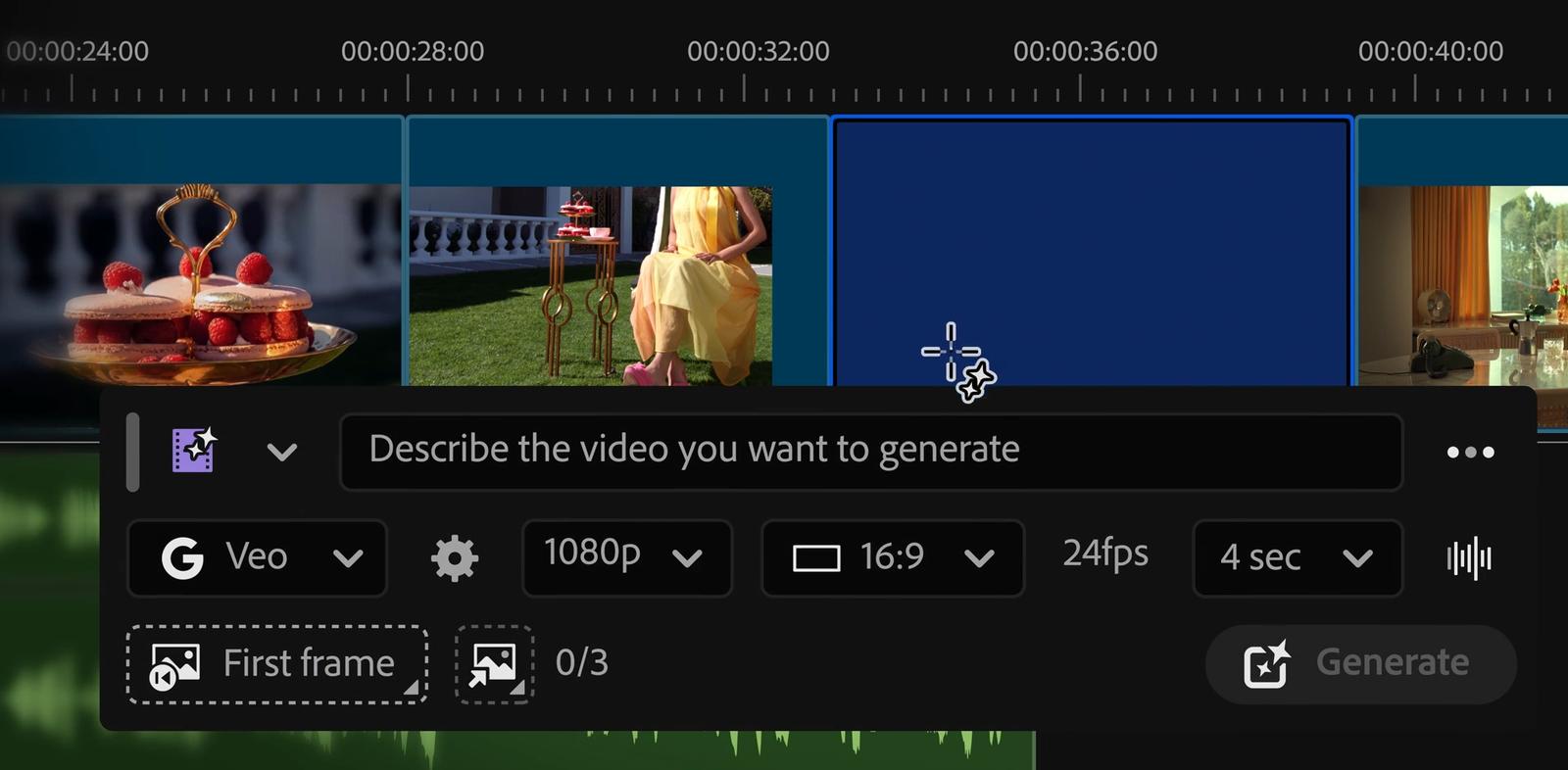
Adobe’s Generative Media Tool in Premiere allows editors to create video and sound effects directly within a sequence, using models including Adobe Firefly and selected third-party providers.
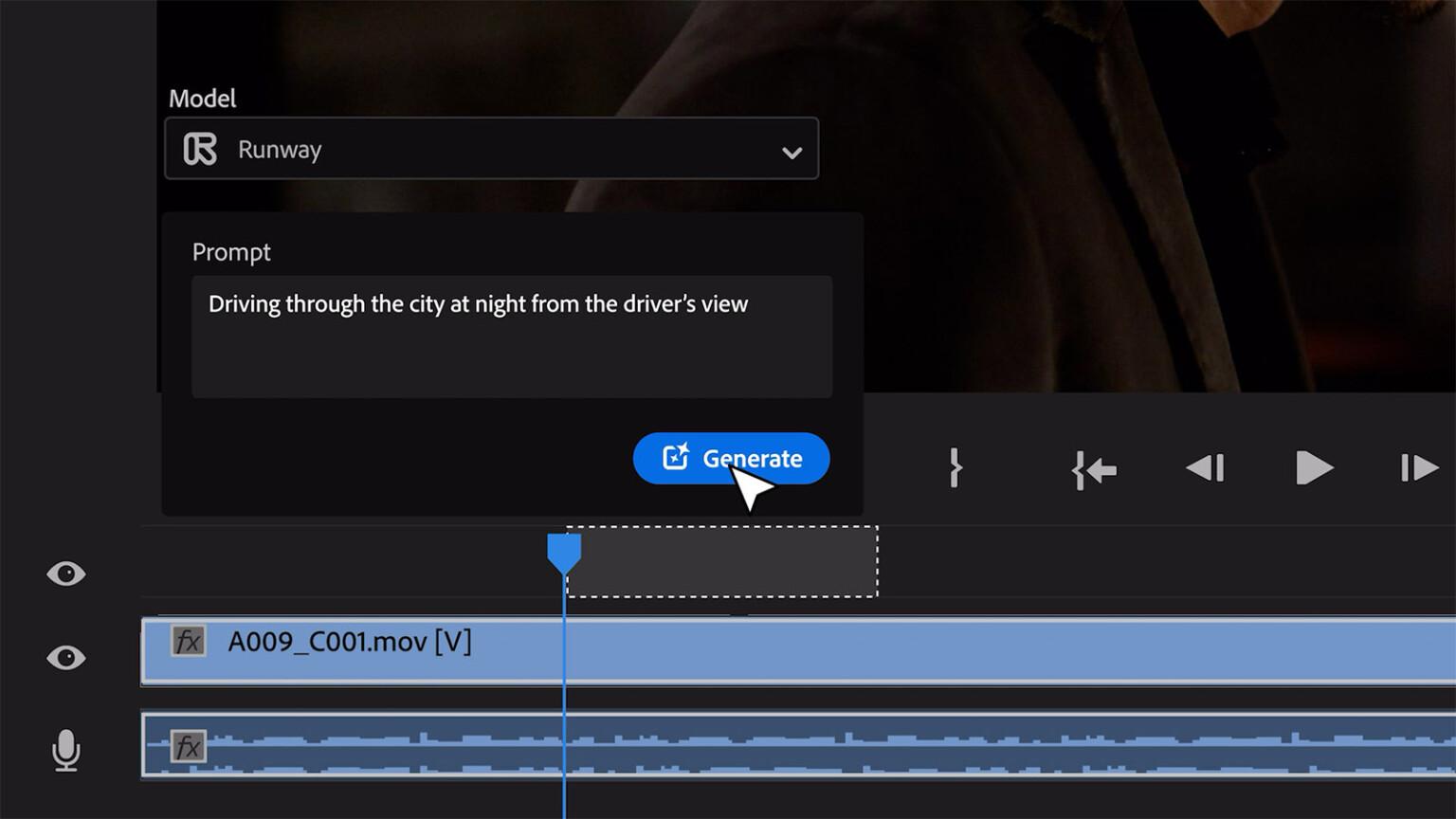
Runway’s plugins offer another approach: generating footage, restyling existing clips, and bringing results directly into Premiere Pro, After Effects, and DaVinci Resolve.
The difference may seem relatively small from the outside. For production professionals, however, it changes where generative AI enters the creative process. Instead of building an edit around separately generated material, filmmakers can increasingly generate or modify material in response to the edit itself.
The Timeline Becomes the Creative Starting Point
Imagine an editor working on a commercial. The sequence is almost complete, but one transition doesn’t work. A missing detail shot makes the pacing feel abrupt, and the available footage doesn’t provide an effective solution. Traditionally, the options might include searching stock libraries, using existing footage creatively, producing an additional shot, or developing a VFX solution. Now, a generative option can sit alongside those established methods. An editor can create a new shot with reference to the surrounding sequence, experiment with alternatives, and evaluate the results without leaving the editing environment. The same principle extends beyond image generation. AI-assisted sound effects, dialogue cleanup, automated organization, and increasingly sophisticated compositing tools are being integrated into post-production software.
This isn’t the disappearance of editing. It’s an expansion of the editor’s available toolkit.
And potentially, a significant reduction in the time spent moving between disconnected applications.
What Changes for VFX and Motion Design?
The implications reach beyond conventional video editing. Adobe’s September 2026 announcement also introduced an AI Assistant for After Effects in public beta, designed to help with project organization, technical operations, expressions, and multi-step tasks.
For motion designers and VFX artists, these are meaningful developments. Complex projects can involve hundreds or thousands of layers, interconnected compositions, expressions, dependencies, and technical adjustments. A significant amount of production time is spent not on creative decisions themselves, but on managing the structures required to execute them.
If AI-assisted tools can reliably reduce this overhead, artists may be able to devote more attention to animation, composition, visual development, and storytelling.
But that reliability matters. Automating a repetitive operation is valuable only when the result remains predictable, editable, and compatible with the rest of the production. For professional studios, control and repeatability aren’t optional features. They’re essential requirements.
Faster Workflows Don’t Eliminate Production Challenges
Integration, however, shouldn’t be confused with complete creative control. A generated clip may enter the timeline more easily, but it still needs to satisfy the same production requirements as any other footage. Does the movement match the surrounding shots? Are the characters, environments, and lighting consistent? Does the material hold up at the required resolution? Can the result be revised without losing previously approved details? And perhaps most importantly, does it serve the story?
Professional production isn’t measured only by the speed of the first result. It’s measured by the reliability of the entire process, including revisions, collaboration, quality control, and final delivery. AI integration can reduce workflow friction. It doesn’t automatically solve every limitation of generative footage.
The Next Chapter of AI Filmmaking
The most important AI filmmaking innovation may not be another model capable of producing a more spectacular five-second clip. It may be the quieter transformation happening inside the tools professionals already use. A timeline where footage can be generated in context. A composition where technical operations can be assisted by AI. A workflow where traditional and generative techniques become increasingly interconnected.
The technology is still evolving, and many of its limitations remain unresolved.
But the direction is difficult to ignore.
AI is no longer just learning to create footage but finding its place in the filmmaking process.
And that may prove to be a much bigger change.


